
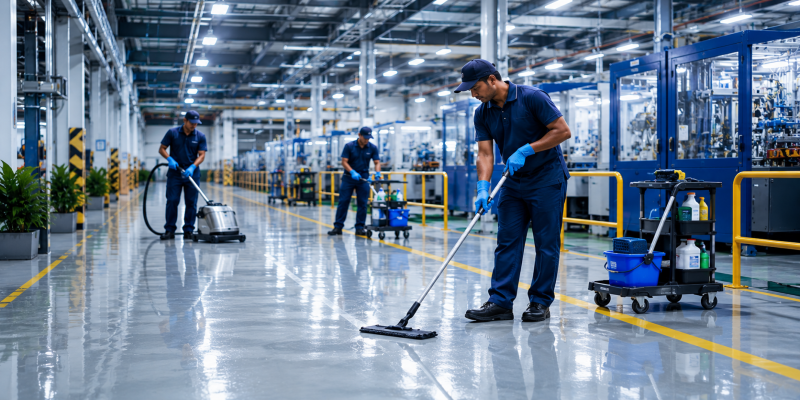
Why Housekeeping Services Are Mandatory for a Business Location?
A clean, hygienic, and well-maintained workplace is more than just a matter of appearance—it is an essential part of running a successful business. Whether it is an office, retail store, hotel, restaurant, factory, warehouse, hospital, educational institution, or commercial establishment, professional housekeeping services play a vital role in maintaining a safe, healthy, productive, and welcoming environment.
In today's competitive business environment, customers and employees expect business locations to maintain high standards of cleanliness and hygiene. Regular housekeeping helps businesses protect their reputation, improve employee satisfaction, reduce health risks, and create a professional atmosphere.
What Are Housekeeping Services?
Housekeeping services refer to the systematic cleaning, hygiene, maintenance, and upkeep of a business premises. These services can include:
- Daily office and commercial cleaning
- Floor and surface cleaning
- Washroom and sanitation maintenance
- Dusting and cleaning of furniture
- Waste collection and disposal
- Glass and window cleaning
- Pantry and common-area cleaning
- Disinfection and hygiene maintenance
- Periodic deep cleaning
- Restroom supplies management
- Cleaning of entrances, corridors, and reception areas
- Basic facility upkeep and reporting
Depending on the type and size of the business, housekeeping can be handled by an in-house team or through a professional housekeeping service provider.
Why Are Housekeeping Services Important for Businesses?
1. Creates a Professional First Impression
Your business location often creates the first impression of your company.
When customers, clients, vendors, candidates, or business partners enter a clean and organized premises, they are more likely to perceive the business as professional, responsible, and trustworthy.
A clean reception area, spotless floor, hygienic restroom, and well-maintained workspace can significantly improve the overall customer experience.
Clean premises communicate professionalism.
2. Improves Employee Health and Hygiene
Employees spend a significant portion of their day at the workplace. Poor cleanliness can contribute to an unhealthy working environment.
Regular housekeeping helps maintain cleanliness in:
- Workstations
- Meeting rooms
- Restrooms
- Pantry areas
- Common spaces
- Stairways and corridors
- Frequently touched surfaces
A well-maintained workplace can help reduce the accumulation of dust, dirt, waste, and other hygiene-related problems.
3. Increases Employee Productivity
A clean and organized workplace can contribute to better employee comfort and concentration.
When employees work in an unpleasant or poorly maintained environment, they may become distracted or dissatisfied. Regular cleaning and organized housekeeping operations help create a workplace where employees can focus on their responsibilities.
A better workplace environment can support better productivity.
4. Enhances Customer Experience
For businesses that directly serve customers, cleanliness is particularly important.
Restaurants, hotels, retail stores, clinics, salons, offices, showrooms, and other customer-facing businesses need to maintain a consistently clean environment.
Customers may judge the quality of a business based on the cleanliness of its premises.
For example, a clean restaurant creates greater confidence in hygiene, while a clean hotel creates a more comfortable experience for guests.
5. Protects Your Business Reputation
Reputation is one of the most valuable assets of any business.
A dirty workplace, unhygienic restroom, overflowing waste bin, or poorly maintained reception area can negatively affect how people perceive a company.
In the age of online reviews and social media, customers can quickly share their experiences with others.
Maintaining high housekeeping standards can therefore become an important part of business reputation management.
6. Supports Workplace Safety
Housekeeping is also connected to workplace safety.
Poor housekeeping can result in:
- Slippery floors
- Blocked walkways
- Improperly stored materials
- Accumulated waste
- Obstructed emergency exits
- Cluttered workspaces
Regular cleaning and proper organization can help identify and address such issues before they become bigger problems.
7. Helps Maintain Business Assets
Dust, dirt, moisture, and improper maintenance can affect furniture, flooring, equipment, fixtures, and other business assets over time.
Regular cleaning and maintenance can help preserve the condition of:
- Office furniture
- Floors
- Glass surfaces
- Doors and windows
- Lighting fixtures
- Washroom equipment
- Common-area infrastructure
Proper housekeeping can therefore contribute to better asset maintenance and potentially reduce unnecessary replacement costs.
8. Maintains Washroom Hygiene
Washroom cleanliness is one of the most important aspects of commercial housekeeping.
A professional housekeeping team can ensure regular:
- Toilet cleaning
- Floor cleaning
- Sink cleaning
- Disinfection
- Waste removal
- Odour control
- Soap and tissue availability
- Hygiene checks
For many customers and employees, the condition of the washroom strongly influences their overall perception of a business.
9. Ensures Consistent Cleaning Standards
Without a proper housekeeping process, cleaning can become irregular and inconsistent.
Professional housekeeping operations can establish:
- Daily cleaning schedules
- Area-wise responsibilities
- Cleaning checklists
- Periodic deep-cleaning schedules
- Washroom inspection routines
- Waste management procedures
- Supervisor inspections
This creates accountability and helps businesses maintain consistent standards.
In-House vs Professional Housekeeping Services
Businesses generally have two options: maintain an internal housekeeping team or outsource housekeeping to a professional service provider.
In-House Housekeeping
An in-house team provides direct control over employees and daily activities. However, the business may need to manage:
- Recruitment
- Staff attendance
- Salary
- Leave management
- Training
- Cleaning materials
- Staff replacement
- Performance monitoring
- Supervisory responsibilities
Professional Housekeeping Services
Outsourcing housekeeping allows businesses to obtain cleaning and facility-maintenance support without managing every operational detail internally.
Professional providers can manage staffing, schedules, supervision, cleaning procedures, and service quality according to the business requirement.
For many businesses, outsourcing can provide a more structured and scalable approach to workplace cleanliness.
Why Housekeeping Management Should Be Digitized
Managing housekeeping staff manually can become difficult as the number of employees, locations, and tasks increases.
A digital housekeeping management system can help businesses manage:
- Employee attendance
- Staff allocation
- Cleaning schedules
- Daily tasks
- Work assignments
- Location-based activities
- Task completion
- Supervisor verification
- Cleaning checklists
- Leave management
- Performance monitoring
- Reports and analytics
This can provide management with better visibility into housekeeping operations.
Housekeeping for Multiple Business Locations
Businesses operating multiple branches, offices, stores, warehouses, hotels, or commercial properties need centralized housekeeping management.
A digital system can help administrators monitor multiple locations from a single platform.
For example, management can track:
Location → Housekeeping Staff → Assigned Tasks → Completion Status → Supervisor Verification → Reports
This structured approach can improve accountability and operational efficiency.
A Clean Workplace Is a Business Investment
Housekeeping should not be considered merely an additional operating expense.
It contributes to:
Cleanliness + Hygiene + Safety + Employee Satisfaction + Customer Experience + Brand Reputation = Better Business Environment
A well-maintained business location creates confidence among employees, customers, visitors, and business partners.
Housekeeping Services Checklist for Businesses
Businesses should consider maintaining a regular housekeeping checklist covering:
- Daily floor cleaning
- Workstation cleaning
- Dust removal
- Restroom sanitation
- Waste collection
- Pantry cleaning
- Common-area cleaning
- Door and glass cleaning
- High-touch surface cleaning
- Cleaning-material inventory
- Periodic deep cleaning
- Hygiene inspections
- Task completion verification
- Supervisor inspection
Conclusion
Housekeeping services are essential for every business location because cleanliness directly influences workplace hygiene, employee well-being, customer experience, safety, productivity, and business reputation.
Whether you operate a small office, retail outlet, restaurant, hotel, factory, warehouse, hospital, educational institution, or a large multi-location business, having a structured housekeeping process can make a significant difference.
Businesses that combine professional housekeeping practices with digital attendance, task management, staff tracking, scheduling, and reporting can achieve better control over their daily operations.